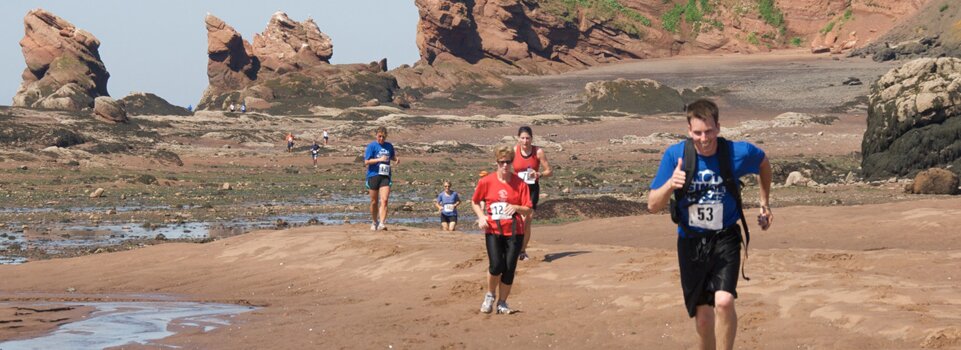
You see it all the time in Hollywood action blockbusters: a big dig where paleontologists work feverishly to extract the secrets of our past from ancient stones. So it comes as something of a surprise for many Bay of Fundy visitors to discover that there isn’t a team of researchers fanned out all over Joggins searching for fossils.
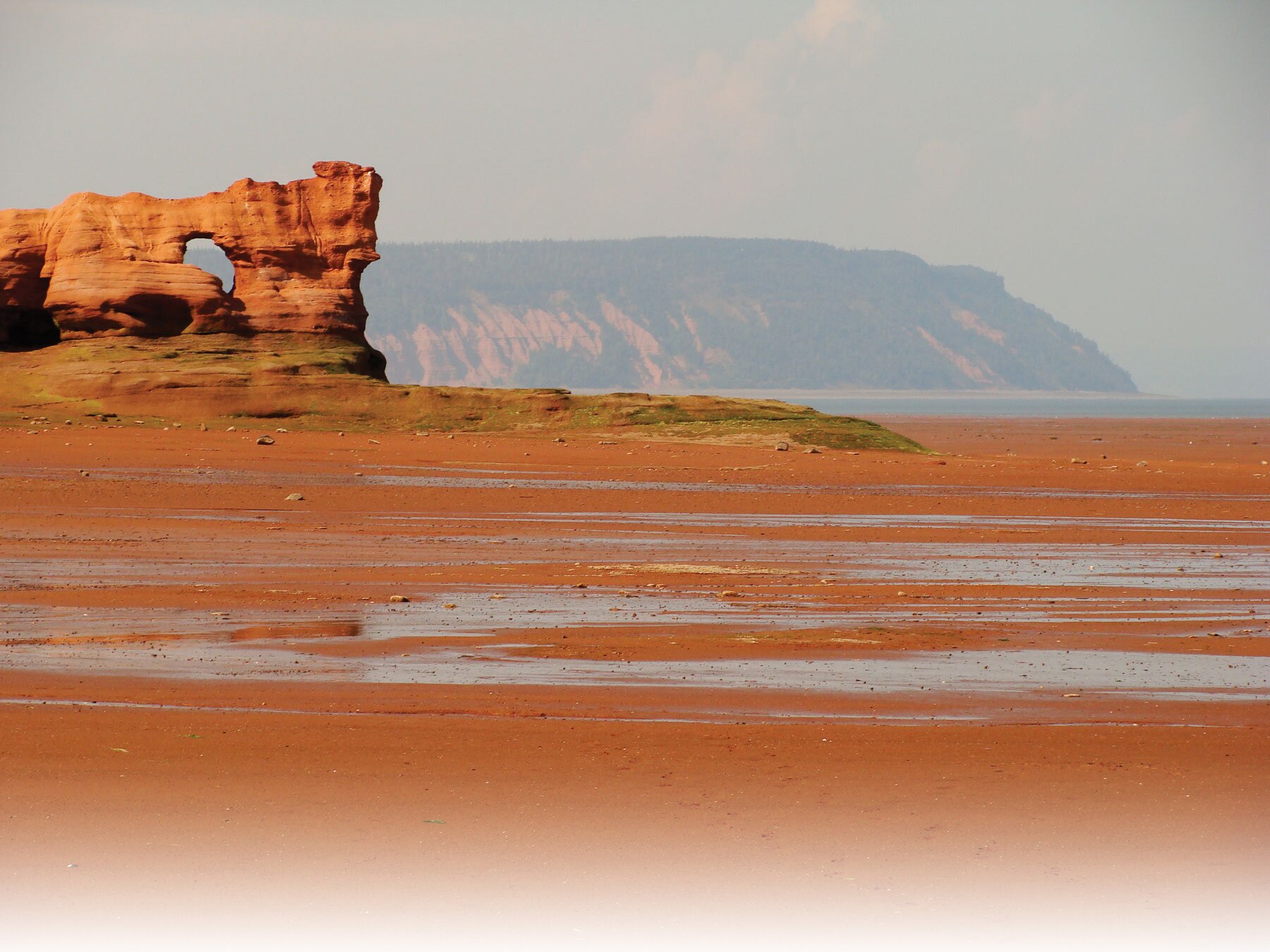
“We let the tides do the work,” says Dr. Melissa Grey, who is the Curator of Paleontology at the Joggins Fossil Centre. “Because they are such high and powerful tides, they do a good job. Every time they recede, something is uncovered, which makes this an exciting place.”
Joggins is one of several sites around the Bay of Fundy where historically significant fossils are found on a regular basis. What makes this particular site unique is that the fossils are all from the late carboniferous era, a period approximately 300 million years ago when most of the world’s coal was formed.
“If you want to see what the world was like then, this is the best site anywhere,” explains Dr. Grey. “Charles Darwin wrote about it, so the site has influenced science and continues to do so. That’s why it was selected as a UNESCO World Heritage site. It is very well known in the international community.”
It is also the site of one of the earliest and most famous reptiles discovered to date: the Hylonomus Lyelli. “It is the earliest-known reptile on the fossil record. Without it, there wouldn’t have been any dinosaurs, or us. So this was a significant evolutionary event in the history of the world, because this is the era when reptiles emerged that could reproduce strictly on land.”
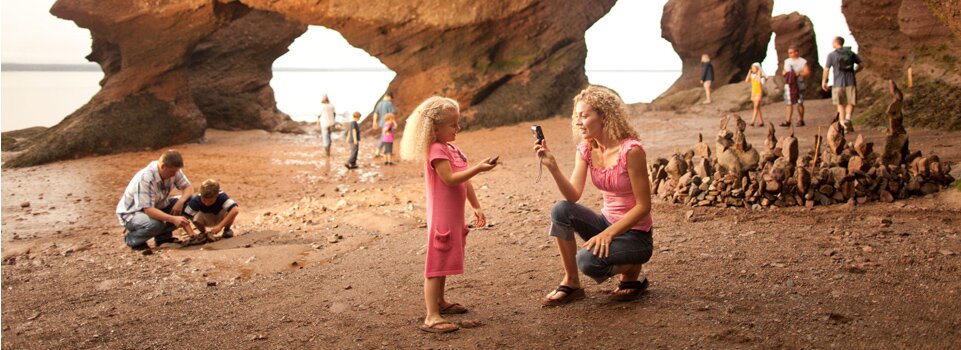
Over the years, visitors have played a key role in finding fossils left by the retreating tides. Yet much like those tides, visitors leave those fossils behind.
“It’s a little known fact that all of the Joggins fossils belong to the province of Nova Scotia,” explains Dr. Grey. “You need a research permit to remove them. But if you find one, we add it to the collection at the Joggins Fossil Centre, with your name displayed forever. So you have an opportunity to make a significant contribution to research and science.”
Given the power and height of the tides, making such a contribution is easier than you think. “That’s why this is an exciting place to be,” says Dr. Grey. “You never know what you’ll find. The list of species continues to grow and there is so much more work to do.”
Round the Bay
-
“The classic coastal section at Joggins, Nova Scotia, is of outstanding universal value. It contains an unrivalled fossil record preserved in its environmental context, which represents the finest example in the world of the terrestrial tropical environment and ecosystems of the Pennsylvanian ‘Coal Age’ of the Earth’s history.” – JogginsFossilCliffs.net
-
“Blue days, green days, stormy waved-chopped grey days. Wind in the sails or calm peaceful paddles, whale tales, eagle tails, dipping toes, and swim, be froze. No sand, long beach, fossil, bird and free beach, happy cheers and mermaids’ tears. Treasure without price.”- Ann, Fredericton NB
-
“The Bay of Fundy…it’s home! Playing in the waves, tasting salt for hours after, bonfires on the beach, finding treasures as you stroll along, laughter and hugs, sunshine and fog and stars and all things good.”-Kathryn, Kitchener ON