One billion tonnes is a very large amount of water. In fact, it’s more water than the combined total of all the freshwater rivers in the world. But that’s how much seawater flows in and out of the Bay of Fundy in one 12.5-hour tide cycle each day, making this one of the most unique places on earth.
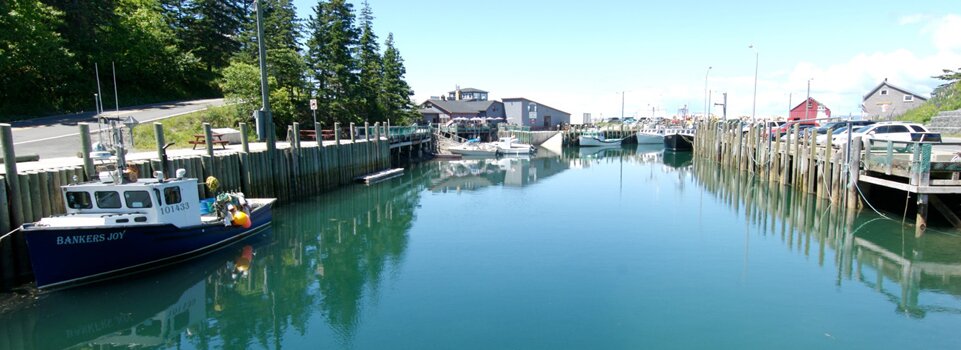
If you’ve ever watched a Bay of Fundy tide empty and fill the harbour, you have a good idea of how much water that is. If not, consider this: it’s enough water to fill the Grand Canyon in Arizona – an area that spans 493,077 hectares (1,218,376 acres) and has a depth of more than 1.6 kilometres (one mile). In fact, at its peak, the water reaches the height of a five-story building, earning the Bay of Fundy a reputation for having the world’s highest tides.
Facts and figures like these are interesting to know, but they don’t answer the question that is probably on your mind: what makes the tides of the Bay of Fundy some of the highest tides in the world? After all, the gravitational pull of the moon and sun creates tidal action around the planet daily. Though that same force is at play here, the height of the tides is also influenced by the Bay’s funnel shape.
The mouth of the Bay of Fundy, which lies between Brier Island, Nova Scotia, and Passamaquoddy Bay, New Brunswick, is approximately 213 metres deep and 100 km wide. Yet the Bay narrows considerably as the waters of the Atlantic Ocean travel along it. The inner end is only 3 kilometres wide and 12 metres deep, which means a lot of water squeezed into a relatively small space.
The tides only reach their peak as the waters in the Bay start to recede and bump up against the next high tide of the Atlantic Ocean rolling in. The effect is something like that of a bathtub: the waves meet, slosh around, fall back and build on each other, getting higher and higher.
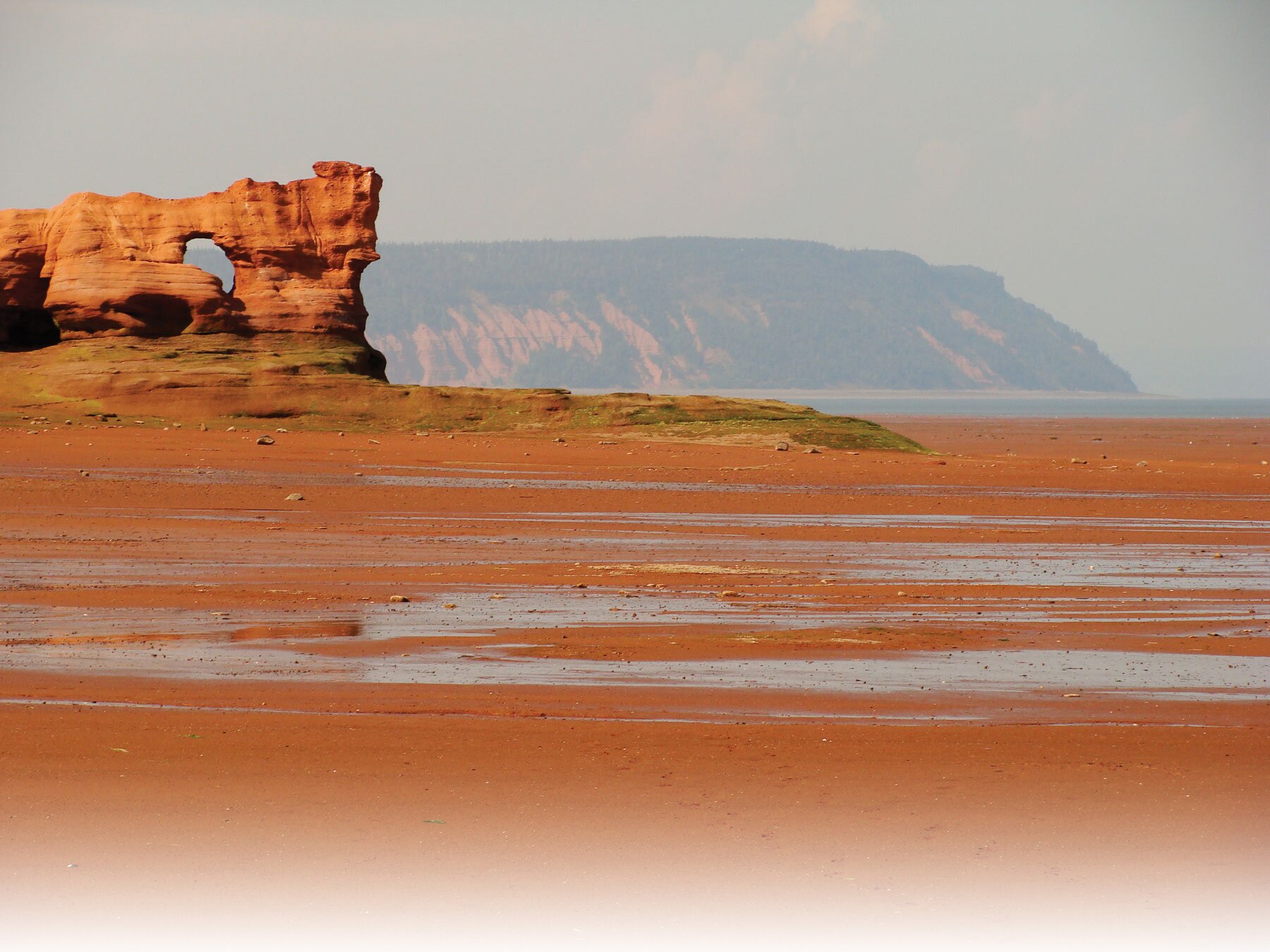
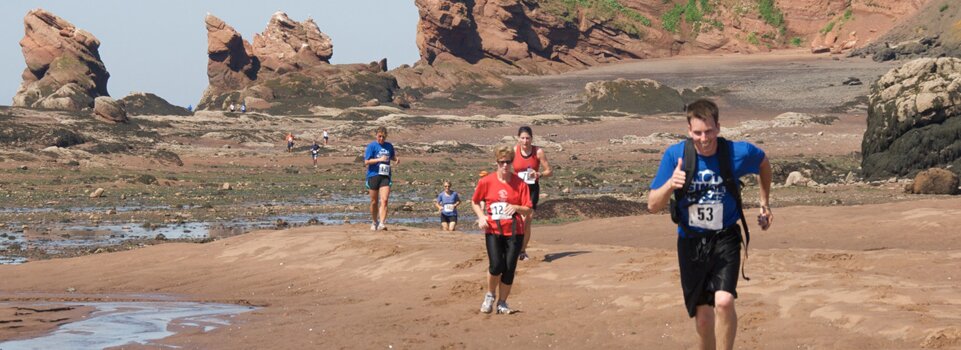
It takes about six hours and 13 minutes for the Atlantic waters to come into the Bay of Fundy, and the same amount of time for them to retreat. During this time, the tide rises from 3.5 metres at the mouth to more than 16 metres at the inner upper end. The difference is so extreme that, if you had a boat anchored in the Bay of Fundy during high tide, you’d have to climb down a nine-metre (30 foot) ladder to reach it at low tide.
There is more we could tell you about the tides and how they make the Bay of Fundy worthy of New7Wonders of Nature honours. Yet the best way to appreciate them is to come and experience their dramatic rise and fall for yourself.
‘Round the Bay
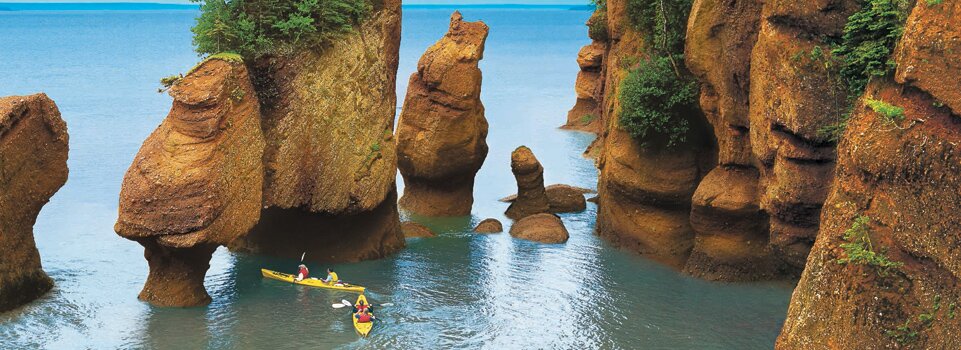
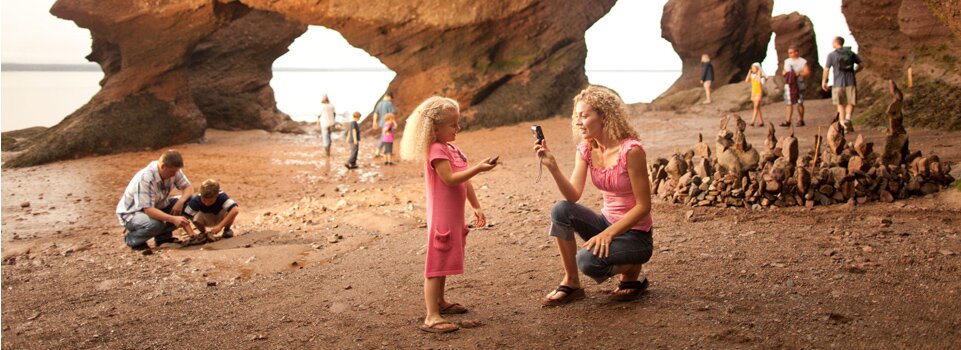
- “We took a family trip to the East Coast last September and spent a beautiful afternoon at Hopewell Rocks at low tide” — Richard (Facebook)
- “…never underestimate the power and beauty of the Bay of Fundy (on experiencing the muddy waters).”–Tim van der Kooi (Enfield Weekly Press)
- “Some people walk on sunshine, some walk in Memphis…Here, we walk on seaweed.”–Scotian Hiker (Facebook)
- “Maybe it was the scallops I had eaten for dinner in Moncton, shellfish so fresh I felt like asking it on a date.”–Ian Brown (Globe and Mail)
- “Swam two days in a row in the Bay of Fundy. Once more and the cryogenic process will be finished.”–@db_metaldog (Twitter)